
Supporting Independence: Encouraging Daily Living Skills with Care, Compassion and Love

Independence Looks Different for Everyone

Living independently is something many people take for granted. For individuals living with disability, mobility challenges or learning difficulties, independence may look very different — and that’s okay.

Some clients live in their own homes with regular support visits, while others live in supported or community accommodation. No matter the setting, independence isn’t about doing everything alone. It’s about having choice, control and the right level of support to live a fulfilling life.


Daily living skills can include:

  • Preparing meals
  • Managing medication
  • Personal care and hygiene
  • Using public transport
  • Attending appointments
  • Engaging in social and community activities

With the right support, these everyday tasks become opportunities for growth, confidence and connection.


Why Supporting Independence Matters

When individuals feel empowered to make decisions and participate in daily life, their wellbeing improves significantly. Independence helps reduce anxiety, strengthens self-esteem and encourages community participation.

Without consistent and thoughtful support, individuals may experience increased stress, vulnerability or social withdrawal. In some cases, a lack of appropriate guidance can place people at risk of exploitation or unsafe situations.


That’s why providing reliable, person-centred support is so important — especially in home care environments.
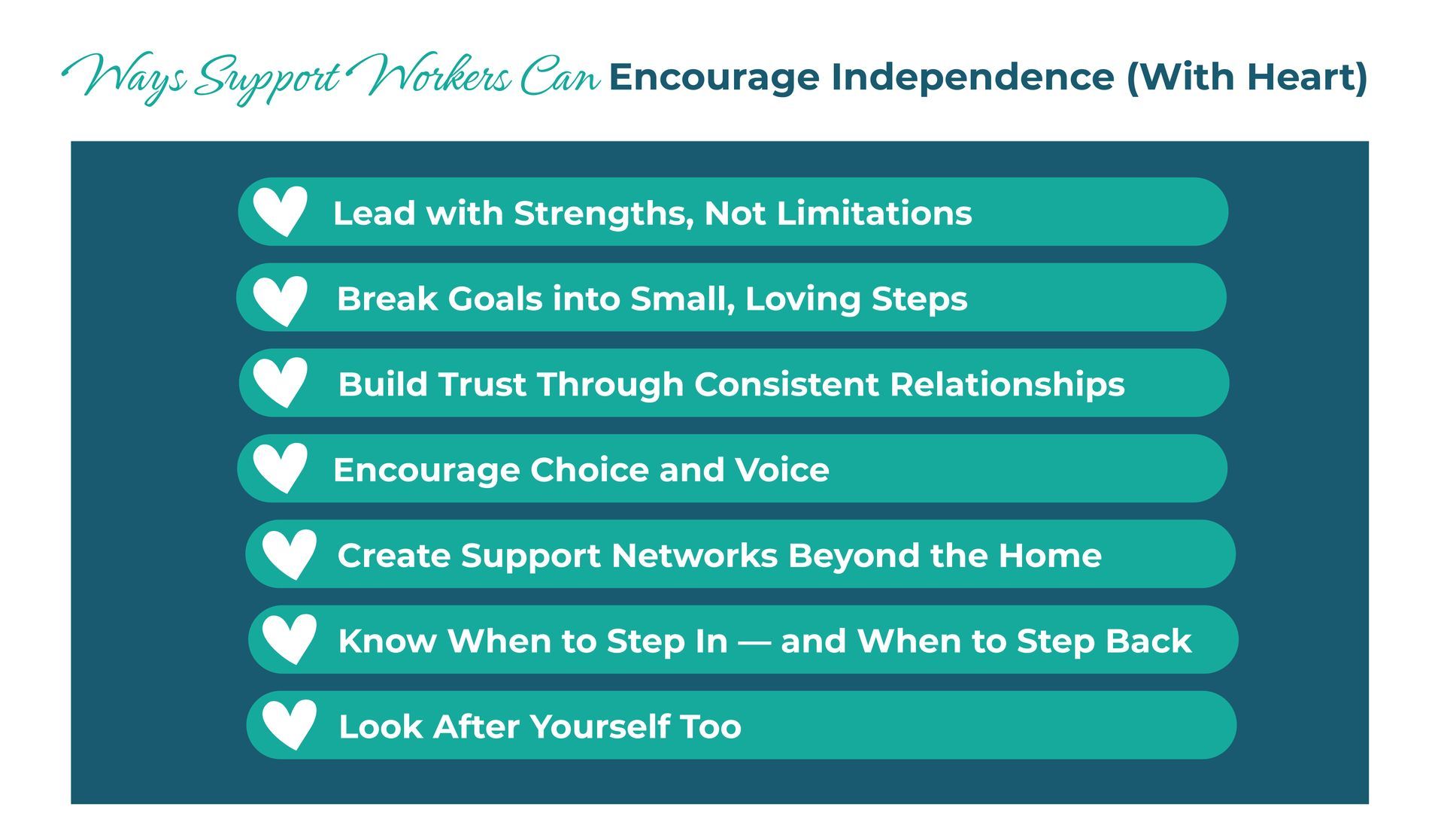
1. Lead with Strengths, Not Limitations

True support begins by recognising what someone can do. A strengths-based approach focuses on abilities, interests and goals rather than limitations. When individuals feel believed in, they’re more likely to try new things and build confidence.


2. Break Goals into Small, Loving Steps

Big goals can feel overwhelming. Small, achievable steps build momentum. Whether it’s learning to travel independently or managing a household task, gradual progress reduces anxiety and creates positive experiences.

Celebrate every win — no matter how small.


3. Build Trust Through Consistent Relationships

Independence grows best in safe, trusting relationships. Familiar faces help individuals feel secure, understood and supported. Consistency in care allows support workers to truly understand each person’s needs, communication style and preferences.


4. Encourage Choice and Voice

One of the most powerful ways to show love and respect is by offering choice. From daily routines to lifestyle decisions, involving individuals in decision-making supports autonomy and self-worth.

Sometimes support is as simple as asking, “What would you like to do today?”


5. Create Support Networks Beyond the Home

No one thrives alone. Encouraging connections with family, friends, neighbours and community groups builds resilience and confidence. A trusted support network helps individuals feel safe while expanding their independence.


6. Know When to Step In — and When to Step Back

Support workers play a delicate role. Doing with someone rather than for them preserves independence. Knowing when to guide, encourage or step back is key to empowering clients without increasing risk.


7. Look After Yourself Too

Caring for others starts with caring for yourself. Support work is deeply rewarding, but it can also be demanding. Prioritising self-care helps prevent burnout and ensures you can continue to show up with patience, compassion and energy.


Independence Is an Act of Love

Supporting independence is one of the most loving things we can do. It says: I see you. I trust you. I believe in your ability to live life your way.


This February, we celebrate the quiet, meaningful moments of care that happen every day — moments that build confidence, encourage independence and strengthen human connection.

At Health Staff Australia, our support workers are committed to helping individuals live rich, purposeful lives with dignity, respect and heart.


January 5, 2026
Supporting Our Care Workers: How Health Staff Australia Prioritizes Training, Wellbeing, and Career Growth In 2026, the landscape of healthcare continues to evolve rapidly, and the demand for compassionate, skilled nurses and support workers in disability and aged care has never been greater. At Health Staff Australia, we recognize that the heart of exceptional care lies in the hands of our dedicated workforce.  That’s why supporting our care workers through comprehensive training, wellbeing initiatives, and meaningful career growth opportunities remains central to everything we do.
December 3, 2025
Behind the Scenes with Health Staff Australia The festive season is a time filled with excitement, family gatherings, and warm celebrations— but for many of our clients, it can also be a challenging time. That’s where our incredible support workers step in. Their Christmas Day doesn’t always look like everyone else’s, yet it is filled with just as much meaning, connection, and joy. Here’s a warm behind-the-scenes look at what a typical Christmas shift can look like for one of our dedicated support workers. Starting the Day with Purpose While most people wake up to presents under the tree, our support workers start their day with something just as meaningful: a commitment to care. The morning begins early, with a quick check of their schedule and client notes to ensure they’re fully prepared for the day ahead. Whether visiting an elderly client living alone or assisting someone with higher needs, they arrive with a smile, knowing they are often the first friendly face their client sees on Christmas morning. Bringing Festive Cheer Into the Home Small acts of joy make a world of difference. Our support workers help clients open holiday cards, set the table for a simple Christmas lunch, or play their favourite festive music to create a warm atmosphere. For clients with limited mobility or special care needs, they gently assist with personal care, medication, and daily tasks—ensuring they feel comfortable, supported, and included in the celebrations. One of the most touching parts of the day is simply sharing conversation. Many clients love reminiscing about Christmas traditions, family memories, or holidays from years gone by. These moments of connection are what truly brighten the day. Supporting Families So They Can Celebrate Too Christmas can be overwhelming for families managing care responsibilities. Support workers give loved ones the chance to relax, host gatherings, attend church services, or simply enjoy time together—knowing their family member is in safe, capable hands. This relief is often the greatest gift we can give. Navigating the Unexpected with Compassion The festive season doesn’t pause the complexities of caring. Whether it’s a change in behaviour, a sudden emotional moment, or the need for extra reassurance, our team handles each situation with calmness and empathy. Their ability to adapt, respond, and uplift clients is a testament to their skill and heart. Ending the Shift with Fulfilment As the day winds down, support workers complete their notes, tidy up the home, and make sure their client is settled and content. They leave quietly, knowing they’ve made someone’s Christmas safer, brighter, and more connected. Many finish their shift and head to their own evening celebrations with loved ones—often tired, but deeply fulfilled. Why This Work Matters Behind every Christmas shift is a person who chooses kindness, service, and humanity. Our support workers bring light into homes that might otherwise feel lonely or overwhelming during the holidays. Their presence ensures every client—no matter their needs—can experience dignity, comfort, and the warmth of the season. This festive period, we celebrate them. Their dedication. Their compassion. Their unwavering commitment to care.  From all of us at Health Staff Australia , thank you to our incredible team for everything you do—not just at Christmas, but all year round.
November 3, 2025
The Power of Kindness in Child Development Celebrating World Kindness Day – 13 November Every year on 13 November, we celebrate World Kindness Day — a day that reminds us that compassion and understanding have the power to make the world a better place for everyone, especially for children. The Origins of World Kindness Day World Kindness Day was established in 1998 by the World Kindness Movement (WKM), a global coalition formed a year earlier in Tokyo. Independent of any religion, culture, or political group, the WKM’s mission is clear: “to inspire individuals and connect nations to create a kinder world.” At its heart, the movement reminds us that kindness is a universal language — one that transcends barriers and celebrates our shared humanity. Why Kindness Matters — Especially for Children with Disabilities Every child deserves the chance to grow, learn, and thrive — to be seen, heard, and included. For children with disabilities, kindness can be the difference between isolation and belonging. At Save the Children, we believe that early childhood development is an investment for life. When we nurture children’s physical, emotional, and intellectual growth, we lay the foundation for a future of confidence and independence. But for children with disabilities, this foundation also depends on something equally vital — acceptance, inclusion, and kindness. Acts of kindness help children with disabilities feel valued and capable. They also teach other children to look beyond differences and see the unique strengths that every individual brings to the world. The Science Behind Kindness Studies show that kindness benefits both the giver and the receiver. It: 💗 Boosts empathy, confidence, and self-esteem 🌱 Reduces stress and promotes emotional well-being 🧠 Encourages cooperation and stronger social bonds 🌈 Builds inclusive, compassionate communities When children grow up in environments where kindness is practiced and modeled, they learn to approach others with empathy — not judgment. This emotional intelligence shapes how they navigate relationships, school, and later life.