
Checklist: How to Prepare for Your First Role as a Support Worker

Starting your first role as a support worker is an exciting

step in your healthcare career.


At Health Staff Australia, we understand that stepping into a new environment — whether in aged care, disability support or community services — can feel both rewarding and overwhelming. The key to success lies in preparation, professionalism and the right mindset.


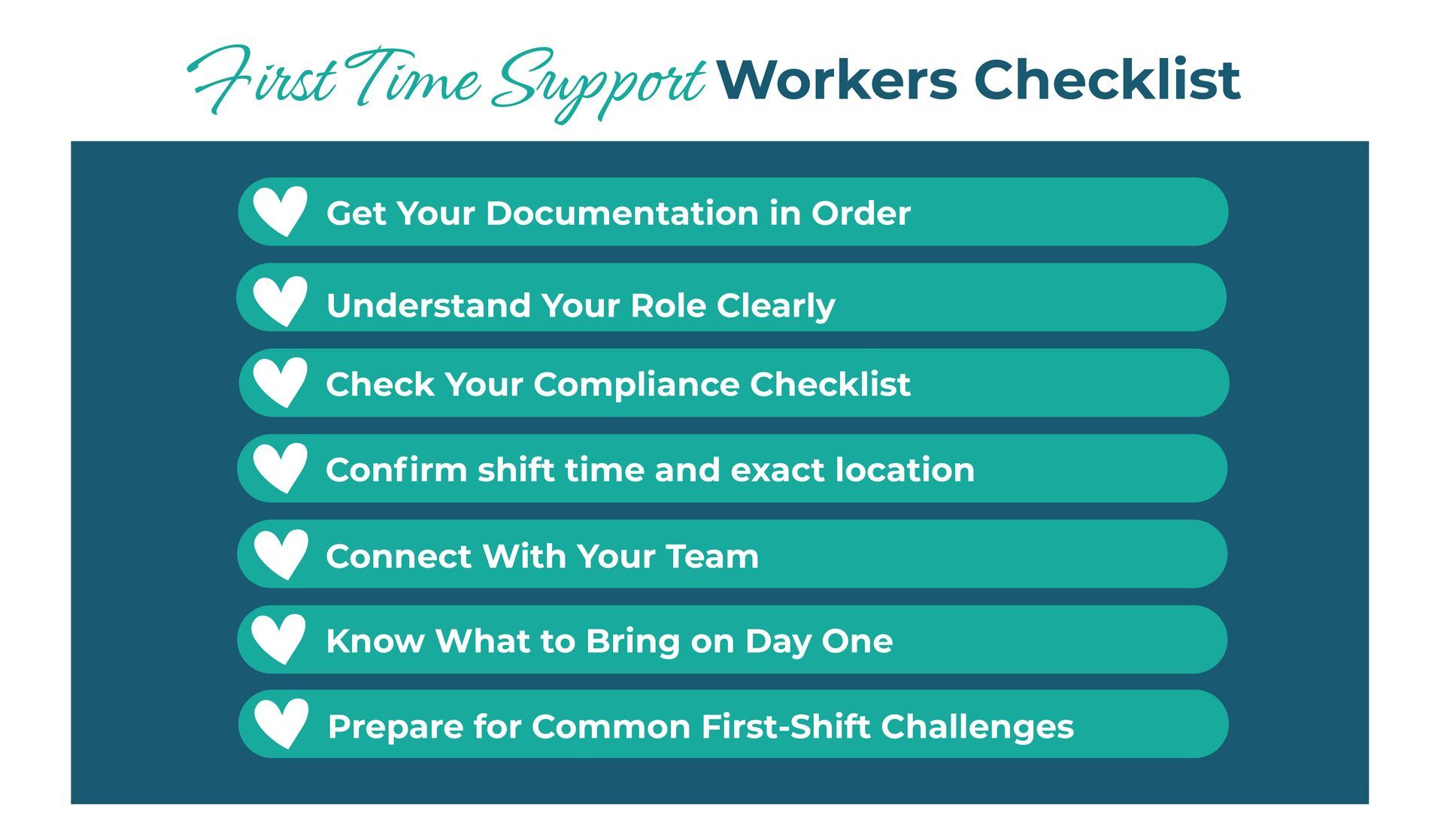
Before your first shift, it’s important to ensure all compliance requirements are completed and up to date. This typically includes your National Police Check, Working With Children Check (if required), NDIS Worker Screening Check where applicable, current First Aid and CPR certification, relevant qualifications, immunisation records, proof of ID and your right to work documentation. Having your paperwork organised not only prevents delays but also demonstrates reliability and readiness from day one.


Understanding your role is equally important. Take time to carefully review your employment contract, position description and any client care plans provided. Familiarise yourself with workplace policies, reporting structures and documentation procedures. If you are unsure about any aspect of your responsibilities, clarify this with your consultant or supervisor before your first shift. Confidence comes from knowing exactly what is expected of you.

Practical preparation can significantly reduce first-day nerves. Confirm your shift time and location, plan your travel route in advance and allow extra time for unforeseen delays. Lay out your uniform the night before and pack essentials such as photo identification, a notebook, pen and water bottle. Presenting yourself professionally and arriving early sets a strong first impression with both colleagues and clients.


Refreshing key skills ahead of your assignment can also make a difference. Reviewing manual handling techniques, infection control practices, documentation standards and effective communication approaches will help you feel competent and capable. Even experienced support workers benefit from revisiting best-practice guidelines before entering a new workplace.
Beyond practical preparation, mindset plays a crucial

role in your success.


Enter your new role with a willingness to learn, adaptability and respect for established routines. Every facility or home environment operates differently. Observing carefully, asking thoughtful questions and maintaining a team-focused attitude will help you integrate smoothly. Remember, support work is built on trust, empathy and dignity — small, respectful interactions lay the foundation for strong client relationships.


It is also normal to encounter minor challenges during your first shift, whether adjusting to new systems, understanding team dynamics or supporting clients with complex needs. Seeking clarification when needed reflects professionalism and accountability. Strong communication with supervisors and colleagues ensures safe, high-quality care and reinforces your commitment to doing the job well.


Preparing thoroughly for your first support worker role allows you to move beyond nerves and focus on what truly matters — providing compassionate, reliable care. At Health Staff Australia, we are committed to supporting you throughout your journey. When you arrive prepared, informed and confident, you don’t just start a job — you begin building a meaningful and impactful career in care.


February is often called the month of love — a time to reflect on connection, kindness and care for
February 2, 2026
Independence Looks Different for Everyone Living independently is something many people take for granted. For individuals living with disability, mobility challenges or learning difficulties, independence may look very different — and that’s okay. Some clients live in their own homes with regular support visits, while others live in supported or community accommodation. No matter the setting, independence isn’t about doing everything alone. It’s about having choice, control and the right level of support to live a fulfilling life. Daily living skills can include: Preparing meals Managing medication Personal care and hygiene Using public transport Attending appointments Engaging in social and community activities With the right support, these everyday tasks become opportunities for growth, confidence and connection. Why Supporting Independence Matters When individuals feel empowered to make decisions and participate in daily life, their wellbeing improves significantly. Independence helps reduce anxiety, strengthens self-esteem and encourages community participation. Without consistent and thoughtful support, individuals may experience increased stress, vulnerability or social withdrawal. In some cases, a lack of appropriate guidance can place people at risk of exploitation or unsafe situations.  That’s why providing reliable, person-centred support is so important — especially in home care environments.
January 5, 2026
Supporting Our Care Workers: How Health Staff Australia Prioritizes Training, Wellbeing, and Career Growth In 2026, the landscape of healthcare continues to evolve rapidly, and the demand for compassionate, skilled nurses and support workers in disability and aged care has never been greater. At Health Staff Australia, we recognize that the heart of exceptional care lies in the hands of our dedicated workforce.  That’s why supporting our care workers through comprehensive training, wellbeing initiatives, and meaningful career growth opportunities remains central to everything we do.
December 3, 2025
Behind the Scenes with Health Staff Australia The festive season is a time filled with excitement, family gatherings, and warm celebrations— but for many of our clients, it can also be a challenging time. That’s where our incredible support workers step in. Their Christmas Day doesn’t always look like everyone else’s, yet it is filled with just as much meaning, connection, and joy. Here’s a warm behind-the-scenes look at what a typical Christmas shift can look like for one of our dedicated support workers. Starting the Day with Purpose While most people wake up to presents under the tree, our support workers start their day with something just as meaningful: a commitment to care. The morning begins early, with a quick check of their schedule and client notes to ensure they’re fully prepared for the day ahead. Whether visiting an elderly client living alone or assisting someone with higher needs, they arrive with a smile, knowing they are often the first friendly face their client sees on Christmas morning. Bringing Festive Cheer Into the Home Small acts of joy make a world of difference. Our support workers help clients open holiday cards, set the table for a simple Christmas lunch, or play their favourite festive music to create a warm atmosphere. For clients with limited mobility or special care needs, they gently assist with personal care, medication, and daily tasks—ensuring they feel comfortable, supported, and included in the celebrations. One of the most touching parts of the day is simply sharing conversation. Many clients love reminiscing about Christmas traditions, family memories, or holidays from years gone by. These moments of connection are what truly brighten the day. Supporting Families So They Can Celebrate Too Christmas can be overwhelming for families managing care responsibilities. Support workers give loved ones the chance to relax, host gatherings, attend church services, or simply enjoy time together—knowing their family member is in safe, capable hands. This relief is often the greatest gift we can give. Navigating the Unexpected with Compassion The festive season doesn’t pause the complexities of caring. Whether it’s a change in behaviour, a sudden emotional moment, or the need for extra reassurance, our team handles each situation with calmness and empathy. Their ability to adapt, respond, and uplift clients is a testament to their skill and heart. Ending the Shift with Fulfilment As the day winds down, support workers complete their notes, tidy up the home, and make sure their client is settled and content. They leave quietly, knowing they’ve made someone’s Christmas safer, brighter, and more connected. Many finish their shift and head to their own evening celebrations with loved ones—often tired, but deeply fulfilled. Why This Work Matters Behind every Christmas shift is a person who chooses kindness, service, and humanity. Our support workers bring light into homes that might otherwise feel lonely or overwhelming during the holidays. Their presence ensures every client—no matter their needs—can experience dignity, comfort, and the warmth of the season. This festive period, we celebrate them. Their dedication. Their compassion. Their unwavering commitment to care.  From all of us at Health Staff Australia , thank you to our incredible team for everything you do—not just at Christmas, but all year round.