Small Daily Wins: How Everyday Activities Can Build Life Skills

Building independence doesn't always start with big milestones. Sometimes, it's the small things we do every day that make the biggest difference.


For people living with disability, everyday activities such as preparing a meal, shopping for groceries or following a daily routine can provide valuable opportunities to develop practical skills, build confidence and work towards greater independence.

With the right support, encouragement and opportunities to practise, these simple tasks can become meaningful steps towards a more independent and fulfilling life.


Why Are Everyday Life Skills Important?

Life skills help people navigate daily life, make decisions and participate more confidently in their communities. While everyone's goals and support needs are different, developing these skills can help individuals exercise greater choice and control over their daily activities.

Everyday tasks also create opportunities to practise problem-solving, communication, decision-making and following instructions.

The goal isn't to do everything independently. It's to help each person develop their abilities, explore what works for them and participate in ways that suit their individual needs.


Everyday Activities That Help Build Independence

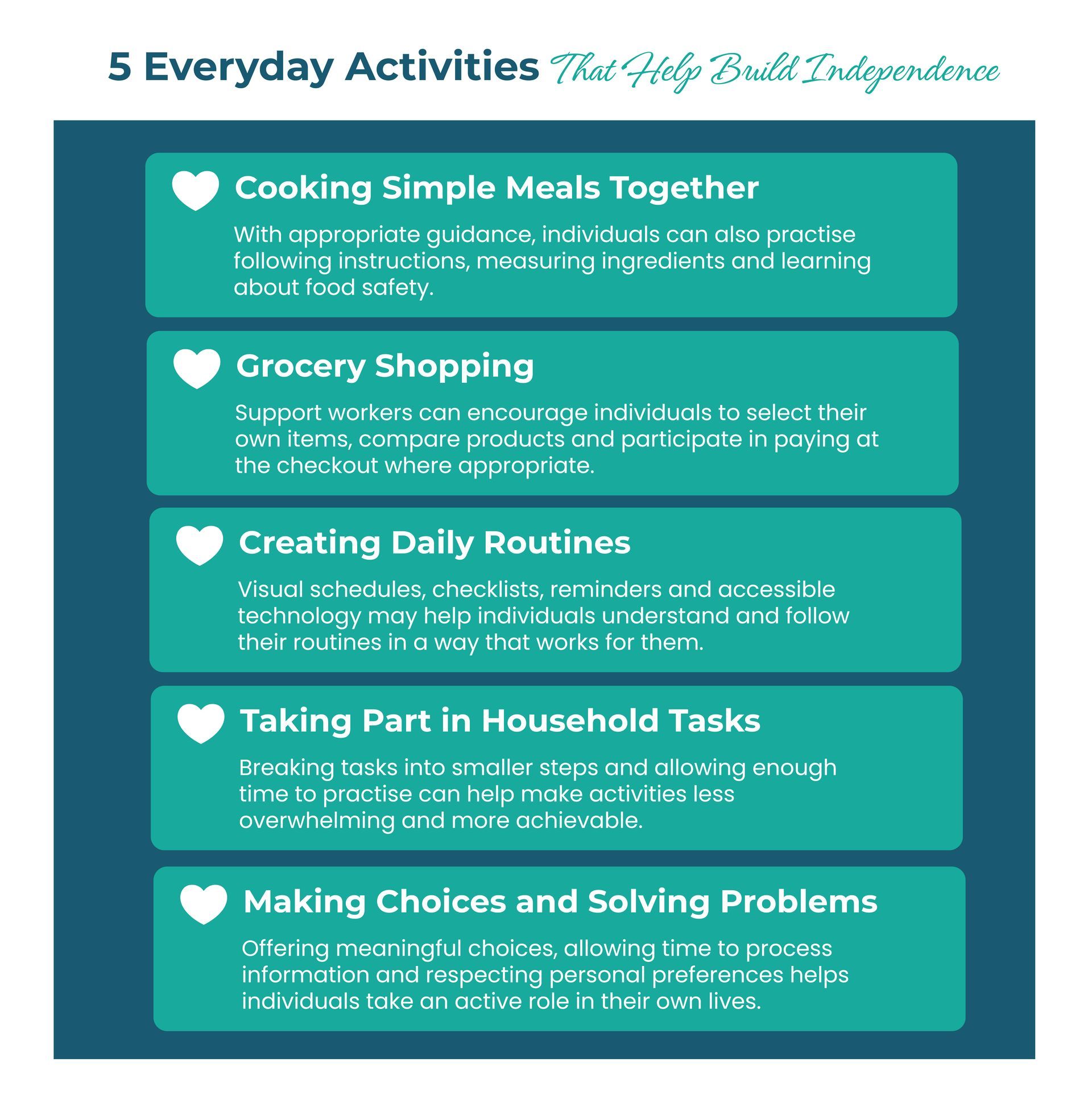
Cooking Simple Meals

Preparing food is a practical way to develop a range of life skills. Activities such as choosing a recipe, gathering ingredients, washing vegetables or making a sandwich can help build confidence in the kitchen.

With appropriate guidance, individuals can also practise following instructions, measuring ingredients and learning about food safety.


Small win: Preparing one part of a meal independently or choosing what to eat for lunch.


Grocery Shopping

A trip to the supermarket offers more than just an opportunity to buy food. It can help individuals practise budgeting, making choices, reading shopping lists and interacting with others.

Starting with a short shopping list or a familiar store can make the experience more manageable. Support workers can encourage individuals to select their own items, compare products and participate in paying at the checkout where appropriate.


Small win: Choosing a favourite snack, finding an item on a shopping list or completing a purchase with support.


Creating Daily Routines

Having a predictable routine can help make everyday life feel more organised and manageable. Activities such as getting dressed, preparing for the day, remembering appointments or keeping track of personal belongings can all contribute to building daily living skills.

Visual schedules, checklists, reminders and accessible technology may help individuals understand and follow their routines in a way that works for them.


Small win: Following a morning checklist or remembering the next step in a familiar routine.


Taking Part in Household Tasks

Household activities provide opportunities to develop practical skills while contributing to the home environment.

Depending on individual abilities and preferences, this could include folding laundry, making the bed, watering plants, setting the table or putting away groceries.


Breaking tasks into smaller steps and allowing enough time to practise can help make activities less overwhelming and more achievable.


Small win: Completing one household task or taking responsibility for a familiar part of the daily routine.


Making Choices and Solving Problems

Independence is also about having a voice in everyday decisions. Choosing an outfit, deciding what activity to do, planning an outing or working out what is needed to prepare lunch can all support decision-making skills.

Offering meaningful choices, allowing time to process information and respecting personal preferences helps individuals take an active role in their own lives.


Small win: Making a decision, expressing a preference or finding a solution to a simple everyday challenge.
The Role of Disability Support Workers

Disability support workers play an important role in creating opportunities for individuals to practise and develop life skills.

Effective support is about working with a person rather than automatically doing everything for them. This means understanding their goals, recognising their existing abilities and providing the right level of assistance.


A supportive approach may include:

  • Breaking tasks into manageable steps: Making activities easier to understand and practise.
  • Encouraging participation: Involving individuals in everyday tasks rather than taking over.
  • Allowing time to learn: Recognising that new skills may take repetition, patience and practice.
  • Celebrating progress: Acknowledging effort, achievements and improvements, no matter how small.
  • Respecting choice and dignity: Supporting individuals to make decisions and participate in ways that reflect their preferences.

Importantly, support should always be tailored to the individual. Some people may need hands-on assistance, while others may benefit from verbal prompts, visual instructions or simply having someone nearby for reassurance.


Celebrating Progress, One Step at a Time

Building life skills isn't about comparing one person's progress with another's. It's about recognising individual goals, providing opportunities to learn and celebrating achievements along the way.

For one person, preparing an entire meal might be an important milestone. For someone else, choosing ingredients or safely completing one step of the process may be just as meaningful.

These small achievements can help create opportunities for greater participation, confidence and personal growth over time.


Supporting Independence Starts

With the Right Support

At Health Staff Australia, quality disability support is about recognising each person's abilities, respecting their choices and supporting them to work towards their individual goals.


Everyday activities can become valuable learning opportunities when they're approached with patience, encouragement and a focus on what matters to the individual.


Because sometimes, the smallest steps can lead to meaningful progress.


Looking for quality disability support or a rewarding career supporting others?

Connect with Health Staff Australia to learn more about available support and opportunities.

Contact Us
September 28, 2026
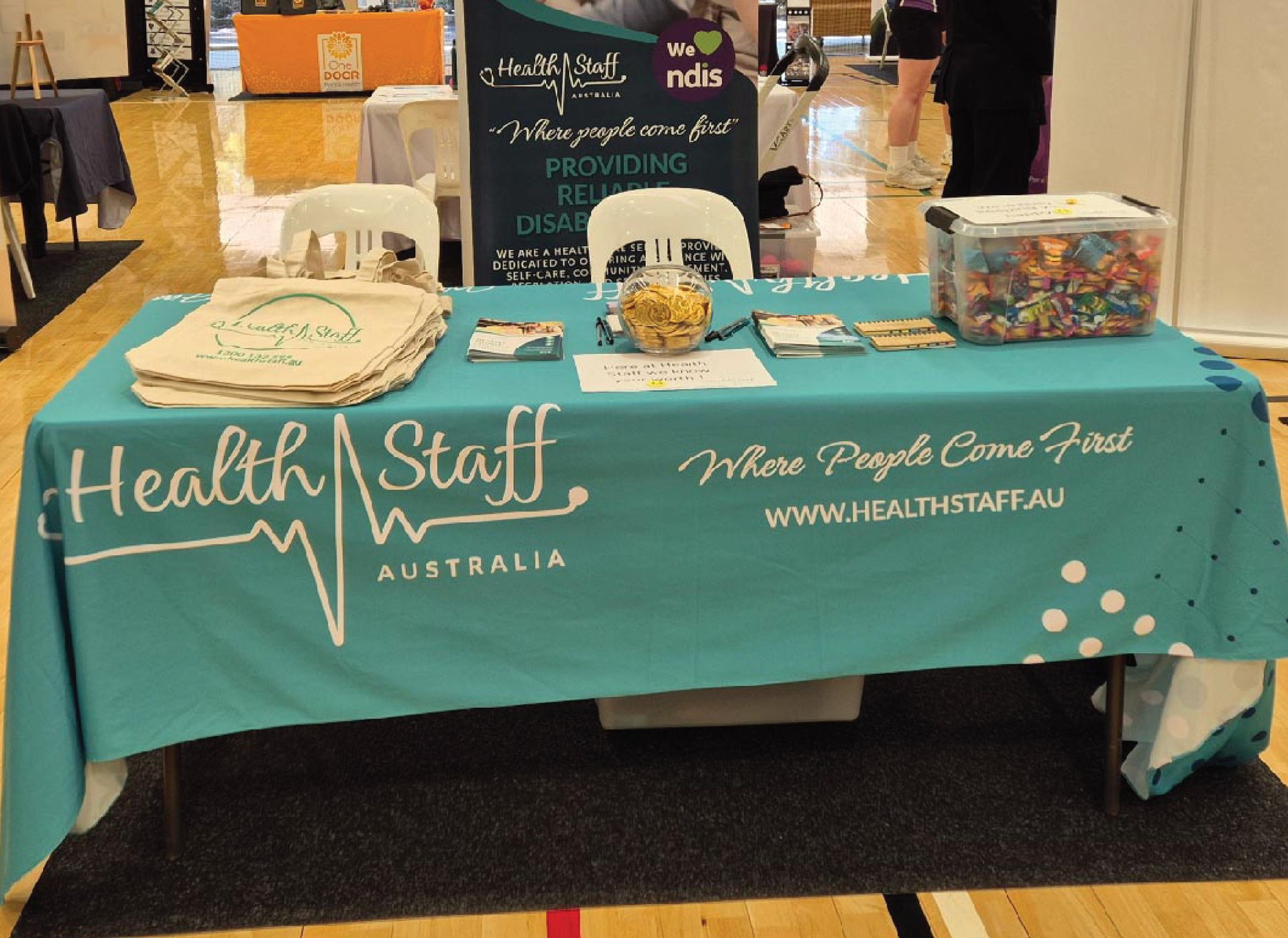
What a day! Thank you, Shoalhaven! 💙 Health Staff Australia was proud to be part of the Shoalhaven Disability Expo 2026, joining the community for a wonderful day focused on connection, inclusion, support and celebrating people of all abilities. With 97 stallholders coming together under one roof, the Expo provided an incredible opportunity for individuals, families, carers and community members to discover services, ask questions, share experiences and connect with organisations that can make a meaningful difference. Connecting with the Community Our Health Staff Australia team was there with our very own stand and table, and we were delighted to welcome so many people throughout the day. A huge thank you to everyone who stopped by our stand, took the time to chat with our team, asked questions and took our details. We loved meeting members of the Shoalhaven community and having the opportunity to introduce Health Staff Australia and the services and support we provide. "The conversations, connections and genuine interest we received made the day a real success for our team."
September 4, 2026
Health Staff Australia is excited to be attending the Shoalhaven Disability Expo 2026 once again as a supplier and exhibitor! Having attended in previous years, we know just how valuable this event is for bringing together people with disability, families, carers, support workers, health professionals, community organisations and service providers. Each year has provided us with a fantastic opportunity to meet new people, have meaningful conversations and connect with the Shoalhaven community. We’re looking forward to being back at Bomaderry on Wednesday, 16 September 2026, and we can’t wait to see both familiar faces and plenty of new ones. Come and Meet the Health Staff Australia Team Health Staff Australia will have a dedicated table at the Expo, and we’d love for you to come and introduce yourself! For our team, attending events like the Shoalhaven Disability Expo is about much more than simply being there as an exhibitor. It gives us the opportunity to connect with people directly, understand the needs of the community, answer questions and introduce people to the services and support we provide. Our previous experiences at the Expo have been incredibly positive. We’ve enjoyed meeting individuals and families, connecting with other service providers and professionals, and building relationships within the local community. These face-to-face conversations are an important part of what we do, and we’re excited to continue building on those connections this year. Whether you’re already familiar with Health Staff Australia or are discovering us for the first time, come and have a chat with our team. We’re always happy to answer questions, share information and talk about how our services may be able to support individuals, families and organisations. Discover Services, Support and Opportunities The Shoalhaven Disability Expo brings more than 90 exhibitors together under one roof, making it an excellent opportunity to discover the range of services and resources available throughout the Shoalhaven and surrounding communities.
July 28, 2026
For many people, home is much more than four walls and a roof. It's where routines are formed, confidence grows, friendships develop and life's everyday moments happen. For people living with disability, having the right home environment can make a significant difference to their independence, wellbeing and quality of life. That's where Supported Independent Living (SIL) comes in. Designed for NDIS participants who require support with everyday living, Supported Independent Living offers more than just accommodation. It provides a safe, supportive environment where people can develop practical life skills, work towards their personal goals and enjoy greater independence while receiving the level of support they need. Rather than focusing on what someone can't do, SIL focuses on what they can achieve with the right support beside them. A Home That Supports Independence Moving into a Supported Independent Living home is often a significant milestone. It represents the opportunity to gain greater independence while maintaining the reassurance of having experienced support workers available when needed. Every participant has unique goals, abilities and aspirations. Some may be working towards managing daily household tasks independently, while others may be focused on increasing community participation, building confidence or developing stronger social connections. SIL is designed to support these individual journeys, recognising that independence looks different for everyone. The beauty of Supported Independent Living is that support is personalised. Participants receive assistance that encourages them to do as much as they can for themselves while providing help where it is needed, creating the perfect balance between independence and support. Everyday Skills That Build Confidence Many of the skills we use every day are things we often take for granted. Preparing meals, doing laundry, shopping for groceries, managing appointments or keeping a home organised all contribute to living independently. Within a Supported Independent Living environment, these everyday activities become opportunities for learning, growth and achievement. Participants are encouraged to build practical life skills such as: Preparing healthy meals Shopping and budgeting Household cleaning and organisation Personal care routines Time management Using public transport Managing appointments Developing communication and social skills Every new skill learned contributes to greater confidence. Often, it's the small achievements that create the biggest sense of accomplishment, helping participants feel more capable and empowered in their daily lives. More Than Support—A Sense of Belonging One of the greatest benefits of Supported Independent Living is the sense of belonging it can provide. Living alongside others creates opportunities to form genuine friendships, share experiences and enjoy everyday moments together. Whether it's cooking dinner, celebrating birthdays, watching a favourite movie or heading out into the community, these shared experiences help reduce isolation and foster meaningful connections.  Feeling part of a household can have a positive impact on emotional wellbeing, helping participants build confidence not only within their home but also in their wider community.