NDIS Reform : What Support Workers Need to Know
Change Is Coming — But What Does It Really Mean?
The National Disability Insurance Scheme (NDIS) continues to evolve, and 2026 marks another important stage in its reform journey. With discussions around funding, eligibility, provider regulation, and service quality making headlines, it's understandable that many support workers are wondering how these changes will affect their day-to-day roles.
The good news? While reforms may influence how services are delivered and managed, the heart of disability support remains the same: providing high-quality, person-centred care.
Here's a closer look at the key changes and what they could mean for you.
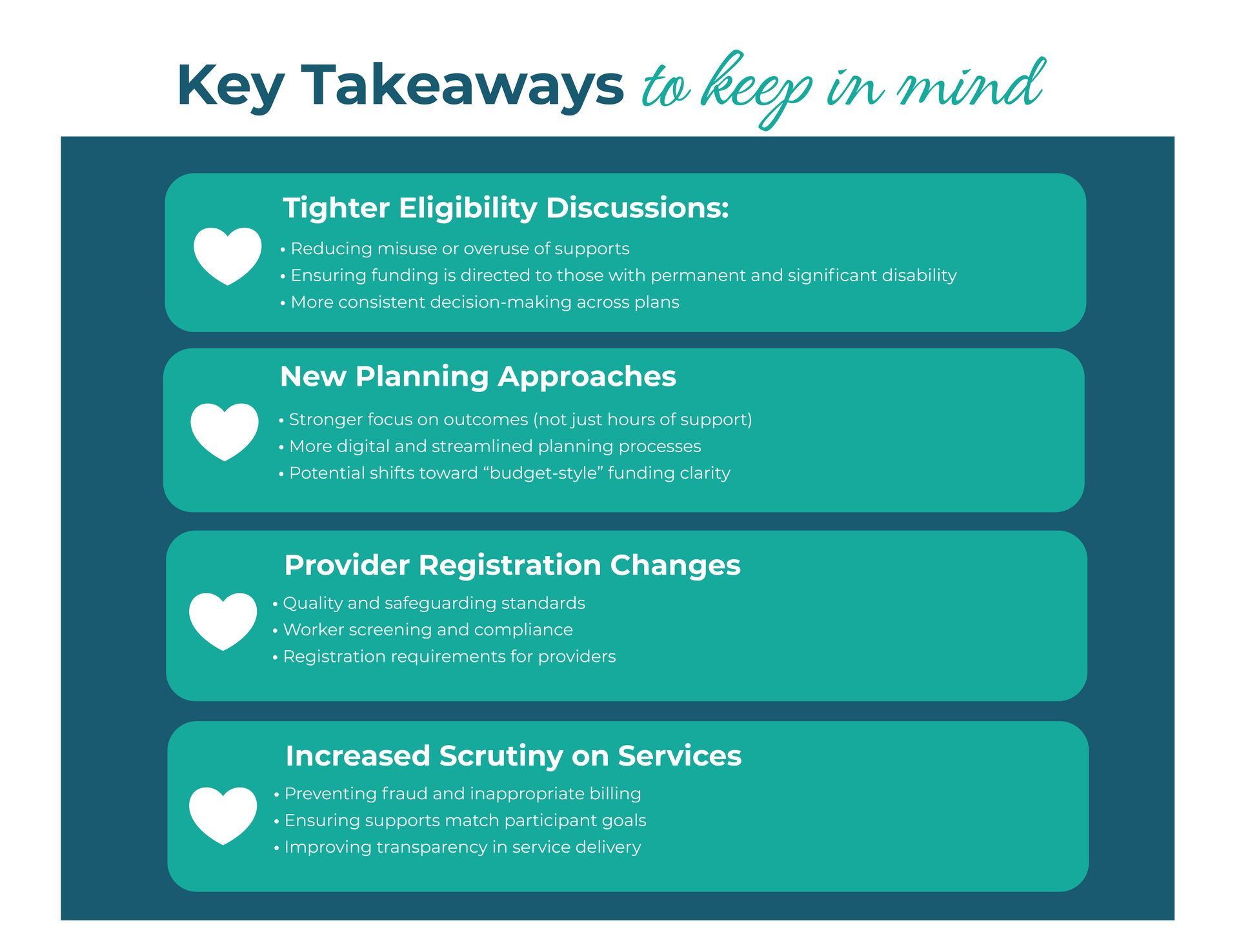
One of the major areas of reform is ensuring that NDIS funding is directed to participants who meet the scheme's eligibility criteria and receive supports that are considered "reasonable and necessary."
The aim is to create greater consistency in decision-making while ensuring participants receive the supports they genuinely need.
For support workers, this may result in more structured support plans, clearer participant goals, and a greater emphasis on documenting how supports help individuals achieve their outcomes.
Planning That Prioritises Outcomes
The NDIS is moving towards planning models that place greater importance on participant outcomes rather than simply allocating hours of support.
Future plans are expected to become more streamlined, with clearer budgets and stronger links between supports and participant goals. As a support worker, this means your role extends beyond delivering care. Your observations, communication, and progress notes will become increasingly valuable in demonstrating how your support contributes to a participant's independence and quality of life.
Stronger Standards for Providers
The government is also strengthening provider regulation to improve safety, quality, and consistency across the disability sector. These changes include increased compliance requirements, enhanced safeguarding measures, and ongoing improvements to provider registration processes. For workers, this may mean more comprehensive onboarding, regular training, updated policies, and greater accountability in everyday practice. While this can feel like additional administration, the overall goal is to improve outcomes for participants and raise standards across the industry.
Increased Accountability Across the Sector
Another focus of the reforms is ensuring that NDIS funding is used appropriately and transparently.
Providers are expected to maintain accurate records, demonstrate value for money, and clearly show how supports align with participant goals. As a result, support workers may notice a greater emphasis on completing shift notes, documenting progress, and maintaining high standards of communication with participants, families, and care teams. These records are no longer simply administrative tasks—they help demonstrate the quality and impact of the support being delivered.
Despite the reforms, one thing remains constant: Australia continues to need compassionate, skilled, and dedicated disability support workers. As demand for disability services continues to grow, organisations are looking for professionals who communicate well, adapt to change, and genuinely care about improving the lives of others. Technology, policies, and funding models may evolve, but empathy, professionalism, and quality care will always remain at the centre of disability support.
Looking Ahead
The NDIS reforms are designed to strengthen the scheme, improve participant outcomes, and build greater confidence across the sector. For support workers, staying informed, embracing ongoing learning, and maintaining high standards of care will ensure you're well positioned for the future. While change can seem daunting, it also presents an opportunity to continue growing as a professional and delivering an even greater impact for the people who rely on your support every day.
Further Reading
For the latest information on NDIS reforms, visit:
- NDIS Review Final Report: https://www.ndisreview.gov.au/resources/final-report
- National Disability Insurance Agency (NDIA): https://www.ndis.gov.au
- NDIS Quality and Safeguards Commission: https://www.ndiscommission.gov.au